




How Long Does Nanoplastia Last? A Deep Dive Into This Revolutionary Hair Treatment
If you are thinking about trying nanoplasty and wondering whether the results are worth it, the first thing most people want to know is: how long does nanoplasty last?
The short answer is between 4 and 8 months, depending on a few key factors like your hair type, how you care for your hair afterwards, and which nanoplasty products your stylist uses.
Let’s look at what that actually means for your hair and your routine.
What Is Nanoplasty?
Nanoplasty is a hair straightening and smoothing treatment that works by penetrating the hair shaft with nano-sized molecules carrying amino acids, organic acids, and proteins.
These particles travel deep into the hair’s cortex, where they bond and restructure the hair from the inside out under heat activation. The result is smoother, shinier, and more manageable hair without the damage associated with older chemical treatments.
One of the biggest selling points of the nanoplasty treatment is that it’s formaldehyde free. It doesn’t use harsh chemicals to alter your hair’s structure. That makes the salon experience far more comfortable and reduces the health risks for both clients and stylists.
And because the formula is enriched with organic acids and natural extracts, most people find their hair condition actually improves after treatment rather than deteriorating.
How Long Will Your Results Last?
Most clients see results that hold for anywhere between 4 and 8 months. A few things determine where you’ll land on that range.
Your hair type and texture: Finer hair tends to retain the treatment for longer. Coarser or denser hair may see results fade a little sooner, though it often sees the most dramatic transformation.
For hair types including curly and thick textures, nanoplasty can reduce frizz and curl by up to 90%.
Hair length and thickness: Longer and thicker hair requires more product and more thorough application to get full coverage from root to tip. If application is uneven, the ends may not hold as long as the mid-lengths.
How you wash your hair after treatment: This is one of the most important factors. Using a sulphate free shampoo every time you wash your hair preserves the treatment significantly.
Sulphates are aggressive cleansing agents that strip product from the hair shaft, and regular use can cut your results short by weeks or even months.
Swimming and lifestyle habits: Chlorinated pools and salt water are both tough on the treatment. If you swim regularly during the Australian summer, rinsing your hair immediately after and keeping up with your sulphate free shampoo routine will help protect your results.
How Nanoplasty Compares to Other Treatments

The nanoplasty hair treatment works differently from most other straightening treatments. Traditional keratin and Brazilian blowout formulas coat the outside of each hair strand.
Nanoplasty, on the other hand, works by penetrating the hair shaft rather than sitting on top of it. This is why the treatment grows out over time rather than washing out, and why it tends to last longer.
If you are weighing up your options, it helps to understand what each treatment actually does. Our guide to Keratin Hair Treatment Service covers how traditional keratin works, what results to expect, and how aftercare affects longevity.
If you are also considering a gentler amino acid option, our article on Cysteine vs. Keratin Hair Straightening Treatment goes through the differences in formulation, results, and maintenance so you can make a more informed decision.
Also, if you are curious about the conditioning side of things, our piece on Hair Botox vs. Keratin Treatment is worth a read, particularly if your priority is repair rather than straightening.
Who Is Nanoplasty Suitable For?
The nanoplasty treatment works across nearly all hair types, including curly, wavy, coarse, and fine textures. It’s also safe for colour treated hair, which is a significant advantage over older straightening options that can interact badly with dye or bleach.
Nanoplasty products are formulated to nourish the hair while reshaping it, so even chemically treated or previously damaged hair can benefit. Most clients report improved hair health after just one session.
For anyone who has avoided hair straightening in the past out of concern for damage, this treatment is worth reconsidering. The organic acids in the formula support the hair structure rather than weakening it, and the formaldehyde free composition means there are no nasty fumes to contend with in the salon.
If you’ve been browsing nanoplasty before and after photos online, the results are consistent: smoother texture, noticeably more shine, and far less time spent managing frizz each morning.
Caring for Your Hair After Nanoplasty
The 72 hours immediately after your appointment are critical. You should not wash your hair during this window, and you should also avoid tying it up, tucking it behind your ears, or using clips. Any pressure applied to the hair while the treatment is still setting can create kinks that become permanent.
After that window passes, these habits will help your results go the distance:
- Switch to a sulphate free shampoo and stick with it
- Try not to wash my hair more than two or three times per week, especially in the first few weeks
- Limit heat styling, or use a heat protectant when you do
- Rinse hair after swimming in the ocean or pool
- Be gentle with hair after nanoplasty when brushing, especially while wet
Staying on top of these habits is genuinely what separates a 4-month result from one that lasts closer to 7 or 8 months.
What to Expect From the Nanoplasty Hair Treatment
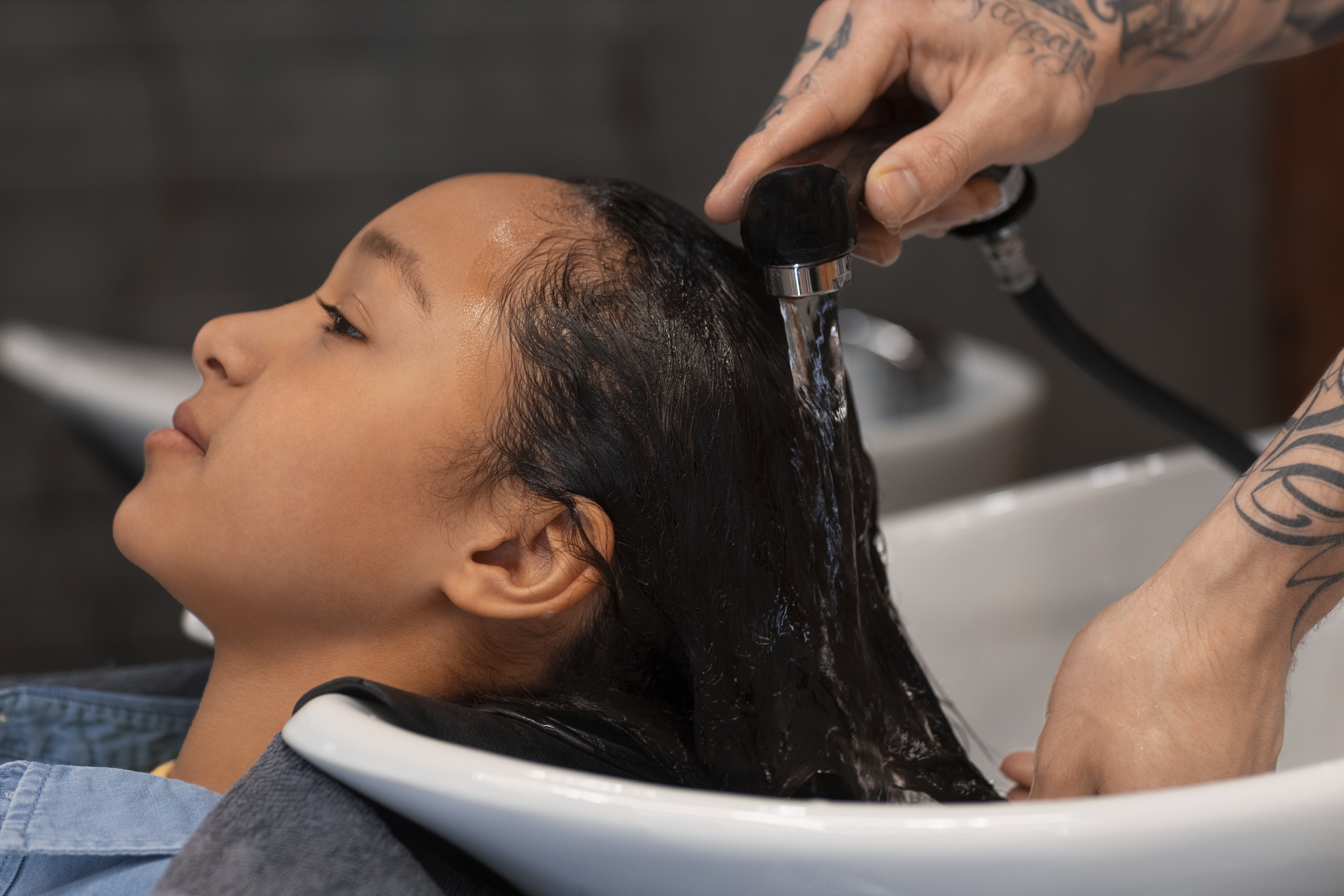
The treatment itself takes a few hours depending on hair length and thickness. Your stylist will apply the product section by section, then use heat to seal it into the hair shaft.
The in-salon experience is comfortable, with no strong chemical smell or eye irritation that some older chemical treatments are known for.
Most people are pleasantly surprised by how much easier their morning routine becomes. Frizz free days stop being the exception and start being the norm. Hair that used to take 45 minutes to style often takes half that time.
In Conclusion
Nanoplasty is a well-regarded straightening treatment that delivers real, lasting results without relying on harsh chemicals or compromising hair health. Results typically last between 4 and 8 months, with the biggest influence being hair type.
If smoother, frizz-free hair sounds like something you want to experience, our team is ready to help you get there. Book Your Nanoplasty Appointment Today.